

Apply now for Georgia auto insurance with $0 deposit*

Based on 1,100+ reviews
|
Excellent
|
App Store 4.7/5
How does OCHO work?
We give you a loan to finance your car insurance interest-free.
Flexible payment plans make keeping your insurance easy and stress-free.
We even give you more time to pay and help you build your credit score.

Car Insurance Georgia: Requirements, Costs, and Smarter Ways to Pay with OCHO

Quick guide: how car insurance in Georgia works today

Georgia requires every driver to carry auto insurance before hitting the road. That's non-negotiable. But here's what catches many Georgia drivers off guard: the average cost of full coverage car insurance in Georgia sits around $2,868 per year in 2026, and minimum coverage still runs roughly $953 annually. For many drivers across Atlanta, Augusta, Savannah, Macon, Columbus, Athens, and rural counties, the monthly premium itself is manageable-it's the large upfront down payment that creates the real barrier to getting and keeping car insurance in Georgia.

Georgia is a fault-based (tort) state, meaning the at-fault driver's liability insurance pays for injuries and property damage after an accident. That makes your liability limits and uninsured motorist coverage especially important.

OCHO is an online georgia auto insurance agency and finance company that lets drivers compare real-time georgia car insurance quotes from multiple insurers, offers $0 or low down payment options with interest-free financing, and helps Georgia drivers align payments with their paychecks.

Here's what this article covers:

  • Georgia car insurance requirements (25/50/25 minimums)
  • Average costs and what drives them
  • Coverage types: liability, collision, comprehensive coverage, uninsured motorist
  • How to find the best car insurance for your budget
  • Pay-as-you-go car insurance options in Georgia
  • No-deposit car insurance with OCHO

Georgia car insurance requirements (25/50/25 minimums)

Driving without insurance coverage in Georgia is illegal. Get caught, and you're looking at fines, registration suspension, and possible license issues. Georgia law requires drivers to carry minimum liability coverage of 25/50/25:

  • $25,000 bodily injury liability per person
  • $50,000 bodily injury per accident ($25,000 per person and 50,000 per accident, often written as person and 50,000 per accident limit)
  • $25,000 incident property damage liability per accident

Georgia requires $25,000 bodily injury liability per person and $25,000 property damage liability per accident as the floor. But here's a real scenario: a Georgia driver with only 25/50/25 limits totals a 2023 SUV in Buckhead and injures two people-one with $40,000 in medical expenses, one with $30,000. Those minimums won't cover all the medical bills and repair costs. The driver is personally liable for the gap.

These are Georgia car insurance requirements to legally register and operate a vehicle, but lenders and leasing companies usually require collision coverage and comprehensive coverage on top of liability. Optional insurance coverages can include collision and comprehensive coverage. Many financial experts recommend higher liability limits like 100/300/100 for better protection. Also strongly recommended: uninsured/underinsured motorist coverage (bodily injury and property damage) and medical payments coverage (MedPay). Insurers must electronically report coverage information to the state of Georgia, so verify your insurer is doing this to avoid registration problems.

Average cost of car insurance in Georgia (2026)

Car insurance rates in Georgia vary widely. Here's the baseline for 2026:
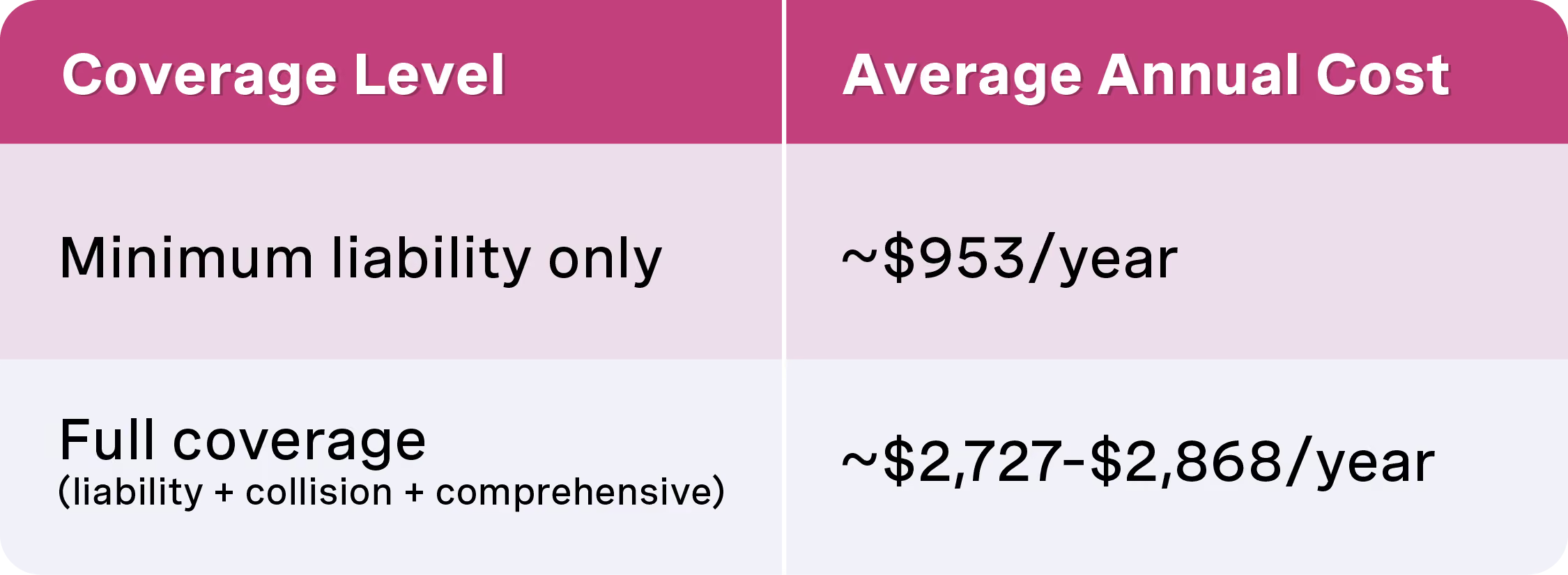
The average cost of car insurance in Georgia is $2,868 for a typical full coverage policy. Full coverage insurance averages $2,727 annually in Georgia depending on the data source and driver profile. Minimum coverage costs about $953 per year in Georgia for clean-record drivers in lower-cost ZIP codes.

Several factors affect what you'll actually pay:

  • Location: Atlanta, Savannah, and Macon generally cost more than smaller towns due to higher accident and theft rates
  • Age and experience: teen and young drivers pay dramatically higher premiums
  • Driving record: speeding tickets, at-fault crashes, and DUIs spike rates fast
  • Vehicle type: newer, high-value SUVs and sedans cost more to insure
  • Credit history: many Georgia insurers still use credit in pricing-drivers with poor credit can pay up to 91% more on full coverage

Car insurance costs can vary significantly based on the driver's profile and circumstances. A 35-year-old good driver in Augusta with a clean driving record might pay $1,500–$2,000/year for full coverage. A 22-year-old in Atlanta with one speeding ticket? Easily $3,500–$4,500. Adding collision and comprehensive to a liability-only policy can move costs from roughly $1,000 to nearly $3,000 per year.

Paying your insurance policy in full usually saves money versus monthly installments. But many drivers can't afford the full down payment-so they end up paying more overall through financing fees, or worse, driving uninsured.


Core coverage types for Georgia drivers (beyond the minimums)

Georgia car insurance minimums only include liability coverage. Full coverage car insurance means adding collision coverage, comprehensive coverage, and a few key optional protections. Here's what each coverage protects against:

Bodily injury and property damage liability pays others when you're at fault in an accident-say a crash on I-285 or I-16. This is your required financial protection, but minimum limits often fall short in serious incidents.

Collision coverage pays to fix or replace your own vehicle if you hit another car, guardrail, or pole. Collision coverage is optional in Georgia, but lenders on financed vehicles almost always require it. Physical damage insurance covers your vehicle's loss or damage in these scenarios.

Comprehensive coverage covers non-collision events: theft in downtown Atlanta, hailstorms in North Georgia, falling trees after severe weather, vandalism, or hitting a deer on a rural road. Comprehensive coverage protects against theft and vandalism specifically.

Uninsured underinsured motorist coverage protects you if a driver in Macon or Savannah has little or no insurance. Uninsured motorist coverage is not required in Georgia, but uninsured/underinsured motorist coverage must be offered by your insurer. Georgia drivers may benefit from optional coverage to protect against uninsured drivers.

Medical payments coverage, roadside assistance, and rental reimbursement are common add-ons worth considering-especially if you depend on your car to work shifts or get kids to school. These are all optional coverage types you can layer on.

When choosing limits and deductibles, consider:

  • The value of the car (drop collision on older, low-value vehicles)
  • Your emergency savings (higher deductible = lower premium but more out-of-pocket risk)
  • Daily driving mileage and commute route-city versus highway versus rural driving habits

How to find the best car insurance in Georgia for your budget

The best car insurance in Georgia means balancing price, coverage options, claims service, and payment flexibility-not just chasing the lowest quote. Progressive offers the lowest average premium at $1,829 in Georgia, USAA has the lowest rates at $1,637 for military families in Georgia, and Country Financial has an average annual premium of $1,958 in Georgia. Mercury Insurance has been trusted for over 60 years in Georgia. But the cheapest insurer for your neighbor might not be cheapest for you.

Steps to follow:

  1. Decide on coverage level first-minimum liability versus more coverage including collision and comprehensive
  2. Gather your vehicle details (VIN, mileage), driver's license number, and past tickets or claims for accurate quotes
  3. Compare quotes from multiple insurers on the same day to avoid rate changes
  4. Ask about discounts: safe driver, multi car, homeowner, paperless billing, telematics

Maintaining a clean driving record can contribute to lower insurance costs. Comparing quotes from multiple insurers is recommended to find the best car insurance rate.

Very low limits may not fully protect you after a serious accident in Atlanta. Poor claims service from a bargain insurer can make repairs and medical bills drag on for months. OCHO lets Georgia drivers compare real-time car insurance quotes from multiple partner carriers, shown side by side so you can see how price changes when you raise liability limits or add coverage.

Pay-as-you-go and mileage-based car insurance options in Georgia

Pay-as-you-go car insurance in Georgia means policies where part of your premium is based on actual miles driven or driving behavior, rather than fixed traditional rating factors alone.

Types you'll encounter:

  • Pay-per-mile: a base rate plus a per-mile fee
  • Telematics/"safe driver" programs: apps or plug-in devices tracking braking, acceleration, speed, and time of day. Telematics programs may offer discounts for safe driving.

Georgia drivers who might benefit:

  • Work-from-home professionals in Alpharetta driving under 5,000 miles/year
  • Retirees in Valdosta or Warner Robins running errands only
  • Secondary vehicles driven mainly on weekends

Pros: potentially lower car insurance rates if you drive fewer miles; some immediate discounts for enrolling. Cons: privacy concerns with behavior tracking, possible rate increases if your driving habits are flagged as risky, and not always the best deal for daily commuters on I-75, I-85, or GA-400.

OCHO can display quotes from insurers offering usage-based or pay-as-you-go programs in Georgia, helping you estimate whether a mileage-based option or traditional policy is cheaper for your real patterns.

No-deposit and low-down-payment car insurance with OCHO in Georgia

Here's what "no-deposit car insurance" actually means in Georgia: traditional insurers usually require a significant upfront payment to bind a 6-month policy. "No deposit" means the driver doesn't have to pay that entire lump sum on day one-but still pays the full policy premium over time.

The problem many drivers face: a driver in Atlanta or Savannah gets quoted $300/month but needs $700+ upfront to start coverage. Missing that down payment often leads to driving uninsured or delaying coverage, which triggers registration and license issues.

How OCHO's model works:

  • OCHO acts as both an insurance agency and a finance company
  • OCHO pays the insurer-required down payment to the partner carrier on the driver's behalf
  • The driver repays OCHO with interest-free installments, often allowing $0 or very low money down at policy start
  • Payments sync with pay cycles-weekly, bi-weekly, or monthly-via automatic payments online

OCHO doesn't charge late fees and offers short grace periods when you hit a cash-flow crunch. That's especially helpful for hourly workers or gig drivers in metro areas who qualify. On-time payments through OCHO can also be reported to credit bureaus, helping some drivers slowly build credit while maintaining continuous Georgia auto insurance coverage.

Georgia-specific rules: fault system, teen drivers, and registration

Georgia is not a no fault state. It uses a tort system where the at-fault driver's liability insurance pays for injuries and property damage. Georgia operates on a fault-based insurance system for auto accidents. Under modified comparative negligence, drivers more than 50% at fault cannot collect damages; those under 50% see recovery reduced by their fault percentage.

Teen drivers: Georgia's Joshua's Law requires 16–17-year-olds to complete 30 hours of classroom instruction and 6 hours behind-the-wheel training, plus 40 hours supervised driving. Learner's permits start at 15 with adult supervision. Intermediate licenses carry nighttime driving limits and passenger restrictions. A full Class C license is available at 18 with a clean record.

Registration and insurance linkage: new residents must title and register their vehicle within 30 days. Georgia requires drivers to maintain continuous liability insurance on any registered vehicle. Drivers in Georgia can face fines for lapses in insurance coverage, plus registration suspension and reinstatement fees. Continuous coverage also prevents higher premiums that follow gaps-and makes switching insurers easier. OCHO's flexible payment schedules help avoid unintentional lapses caused by renewal down payments you can't afford all at once.

man driving

How to get cheap car insurance in Georgia

Keeping your car insurance costs low comes down to a mix of smart choices:

  • Maintain a clean driving record-no tickets, no at-fault accidents
  • Ask about discounts: safe driving and defensive driving courses can lead to additional discounts. Discounts include multi-vehicle and good student discounts (a good student discount can save teen drivers real money)
  • Bundle policies: bundling auto and renters insurance or home insurance can save money
  • Raise your deductible if you have savings to cover it
  • Set up paperless billing and automatic payments for small but real discounts
  • Drive less: consider pay-per-mile if you qualify
  • Insure multiple vehicles on one policy for multi car discounts
  • Compare annually: discounts vary by insurance provider and state regulations, so shop around

Safe driving can lead to additional discounts with many consumer groups and carriers. OCHO helps by showing you quotes from multiple insurers so you can find the right balance of cost and coverage without spending hours on the phone.

Georgia car insurance FAQs

Laws and average prices change, so re-shop your car insurance every 6–12 months-especially after moving, paying off a car, or improving your driving record. The biggest barrier for many drivers isn't the monthly payment. It's getting started. Don't let a down payment keep you off the road without coverage.

How much is car insurance in Georgia per month?

Full coverage averages roughly $230–$240 per month based on the $2,727–$2,868 annual average. But your first month can cost significantly more because of the down payment. Many drivers pay $700+ upfront before monthly billing begins.

Can I get car insurance in Georgia with a suspended license or SR-22 requirement?

Yes. Some insurers and brokers can help high-risk drivers secure coverage and file an SR-22 with the state. OCHO's partner network may include carriers that handle SR-22 filings.

Does Georgia allow electronic proof of insurance?

Yes. Digital ID cards on your phone are accepted during traffic stops and at most registration offices. Many online agencies, including OCHO, issue instant digital proof after binding coverage.

Do I need full coverage on an older paid-off car?

Not necessarily. If your car's value is low enough that collision and comprehensive premiums exceed what you'd receive in a payout, dropping them may make sense. Keep liability and consider uninsured motorist coverage at minimum.

How fast can I get proof of insurance in Georgia?

Most online agencies provide instant proof. With OCHO, you can have your insurance card digitally within minutes of binding your policy.